From the Ecuadorian Tropics
Artista Visual · Guayaquil, Ecuador
Cuerpo, memoria y territorio. Una práctica en el cruce entre lo ancestral y lo contemporáneo.
Body, memory, and territory. A practice at the crossroads of the ancestral and the contemporary.
Sobre la artista About the artist
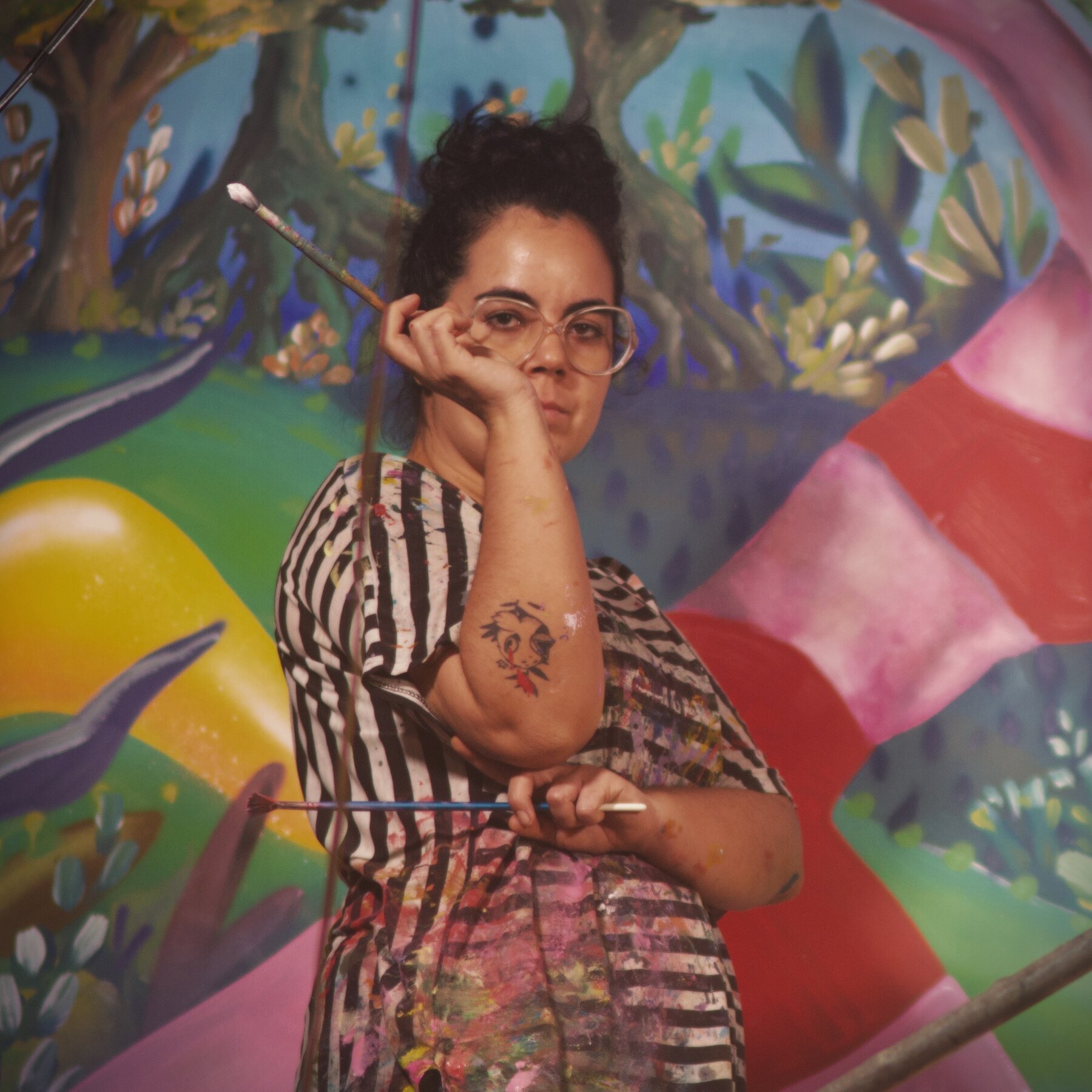
Carla Bresciani (Guayaquil, 1988) es una artista visual ecuatoriana, con vínculos familiares y culturales entre la costa manabita y el Perú, cuya práctica se desarrolla en el cruce entre cuerpo, memoria y territorio.
Desde hace varios años sostiene una investigación en torno a la relación entre la feminidad en las culturas precolombinas de la costa ecuatoriana —especialmente la cultura Valdivia, considerada la más antigua de América con más de 5.000 años de historia— y las construcciones contemporáneas de lo femenino.
Su trabajo no busca establecer equivalencias directas, sino activar una lectura crítica sobre cómo estas formas de organización simbólica, donde lo femenino ocupaba un lugar central, se transformaron con la colonización y continúan reconfigurándose en la actualidad. A través de la pintura, la escultura, la cerámica, el muralismo y el arte digital, su obra explora la fortaleza, la cosmovisión y las tensiones del cuerpo femenino como espacio de continuidad histórica.
Su universo plástico se manifiesta como un paisaje onírico donde dialogan lo mítico y lo actual, lo ancestral y lo tecnológico.
Carla Bresciani (Guayaquil, 1988) is an Ecuadorian visual artist with family and cultural ties between the Manabí coast and Peru, whose practice develops at the intersection of body, memory, and territory.
For several years she has maintained a research project around the relationship between femininity in the pre-Columbian cultures of the Ecuadorian coast—especially the Valdivia culture, considered the oldest in the Americas with more than 5,000 years of history—and contemporary constructions of the feminine.
Her work does not seek to establish direct equivalences, but rather to activate a critical reading of how these forms of symbolic organization, where the feminine occupied a central place, were transformed by colonization and continue to reconfigure themselves today. Through painting, sculpture, ceramics, muralism, and digital art, her work explores the strength, cosmovision, and tensions of the female body as a space of historical continuity.
Her artistic universe manifests as a dreamlike landscape where the mythical and the present, the ancestral and the technological, engage in constant dialogue.
Declaración artística Artist Statement
Mi obra nace de una conexión profunda con la tierra que habito y los ecos de quienes la habitaron antes. En un proceso de introspección en la costa manabita, sentí como si las rocas y los vestigios de la playa me hablaran: vi en ellos rostros antiguos, señales, energías que me invitaban a recordar.
Crecí rodeada por la fuerza de mujeres que me marcaron profundamente. Mi madre, médium, me enseñó a percibir el mundo desde la energía, la intuición y el poder sanador de la naturaleza. Mi abuela, trabajadora social y maestra, me inculcó la importancia de la justicia, la colectividad y el pensamiento crítico.
Una de las grandes motivaciones de mi obra es visibilizar esa otra parte del país: la que pertenece al mar, a las costas, al verdor, a lo femenino, a la vida tropical. Pinto para devolverle valor simbólico a este territorio que ha sido sistemáticamente marginado por una mirada centralista.
Trabajo desde una estética que me es propia, desde un lenguaje visual que fusiona lo espiritual con lo onírico, lo ritual con lo contemporáneo. No represento el pasado: lo reactivo, lo sueño, lo traduzco desde mi cuerpo.
Mi obra es una forma de descolonizar el imaginario, de reencantar lo cotidiano, y de volver a mirar —con respeto y belleza— lo que esta tierra nos quiere contar.
My work is born from a deep connection with the land I inhabit and the echoes of those who inhabited it before. In a process of introspection on the Manabí coast, I felt as if the rocks and beach vestiges were speaking to me: I saw in them ancient faces, signs, energies inviting me to remember.
I grew up surrounded by the strength of women who profoundly marked me. My mother, a medium, taught me to perceive the world through energy, intuition, and the healing power of nature. My grandmother, a social worker and teacher, instilled in me the importance of justice, collectivity, and critical thinking.
One of my great motivations is to make visible that other part of my country: the one that belongs to the sea, the coasts, the greenery, the feminine, the tropical life. I paint to restore symbolic value to this territory that has been systematically marginalized by a centralist gaze.
I work from an aesthetic that is my own, a visual language that fuses the spiritual with the dreamlike, the ritual with the contemporary. I do not represent the past: I reactivate it, dream it, translate it through my body.
My work is a form of decolonizing the imagination, re-enchanting the everyday, and looking again—with respect and beauty—at what this land wants to tell us.
Proyecto expositivo central Featured Exhibition Project
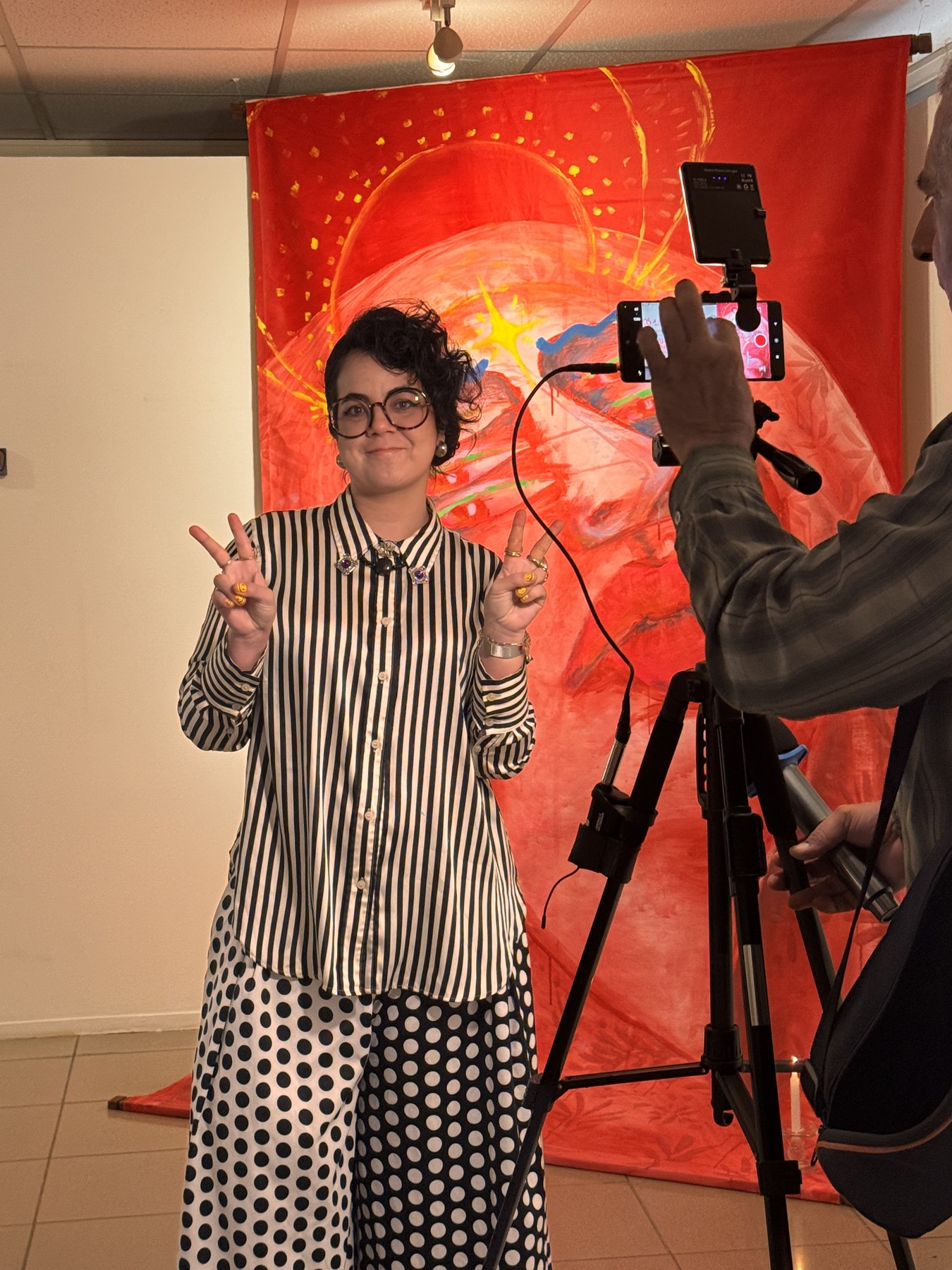
"Cuerpos del Sur: Nada que conquistar" es un proyecto expositivo que investiga el cuerpo femenino latinoamericano como territorio de memoria, transformación y continuidad histórica.
A partir de una práctica que articula archivo fotográfico, pintura, escultura y dispositivos espaciales, la obra propone una lectura contemporánea de las cosmovisiones precolombinas, especialmente de la cultura Valdivia, donde lo femenino ocupaba un lugar central en la organización simbólica y social.
El proyecto no busca reconstruir el pasado, sino activar un diálogo entre estos sistemas de pensamiento y el presente, entendiendo el cuerpo como un espacio donde la historia no desaparece, sino que se transforma, se fragmenta y se reconfigura.
"Bodies of the South: Nothing to Conquer" is an exhibition project that investigates the Latin American female body as a territory of memory, transformation, and historical continuity.
Drawing on photography archives, painting, sculpture, and spatial devices, the work proposes a contemporary reading of pre-Columbian cosmovisions, especially the Valdivia culture, where the feminine occupied a central place in symbolic and social organization.
The project does not seek to reconstruct the past, but to activate a dialogue between these systems of thought and the present, understanding the body as a space where history does not disappear, but transforms, fragments, and reconfigures.
En movimiento In motion
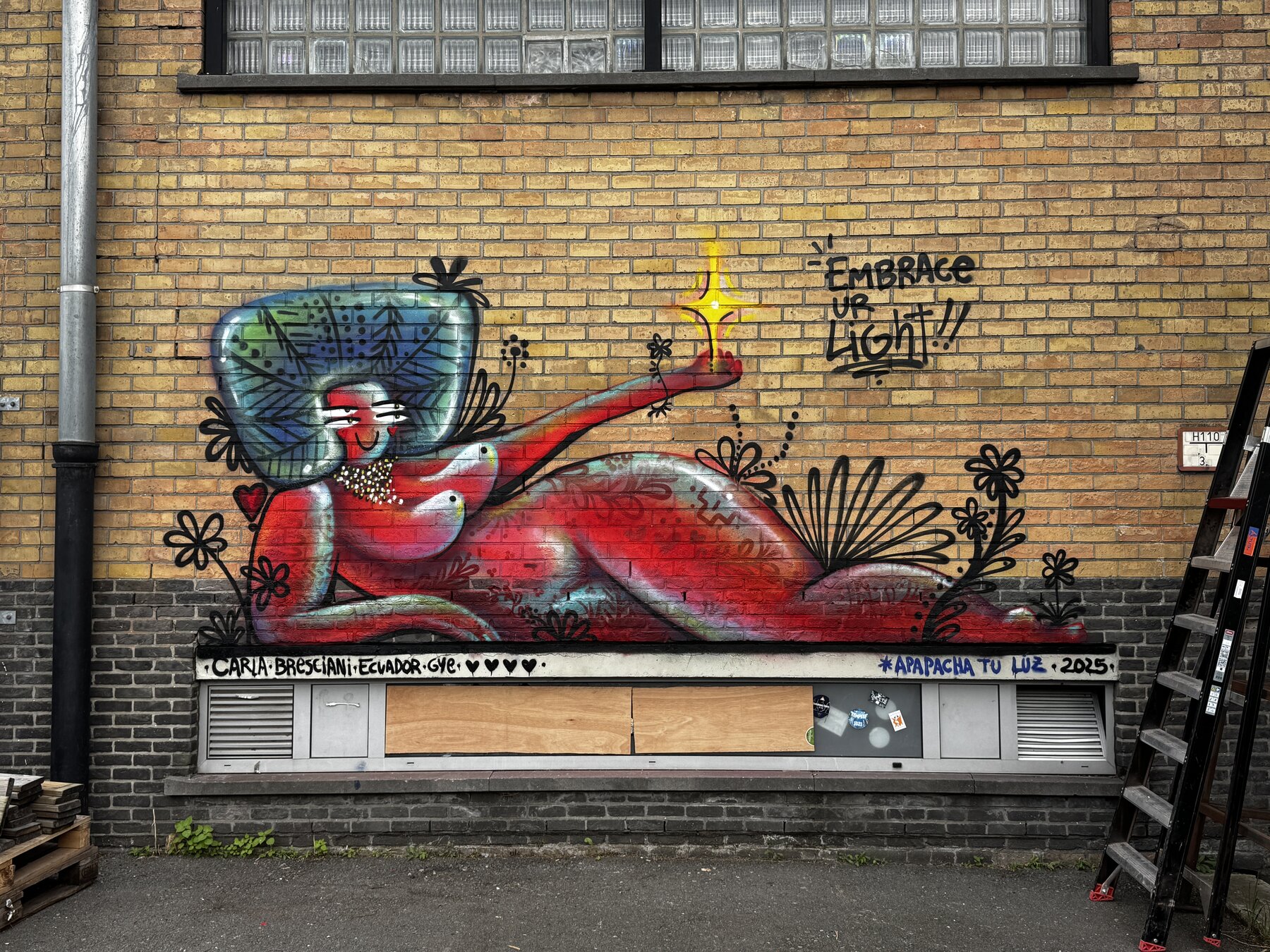
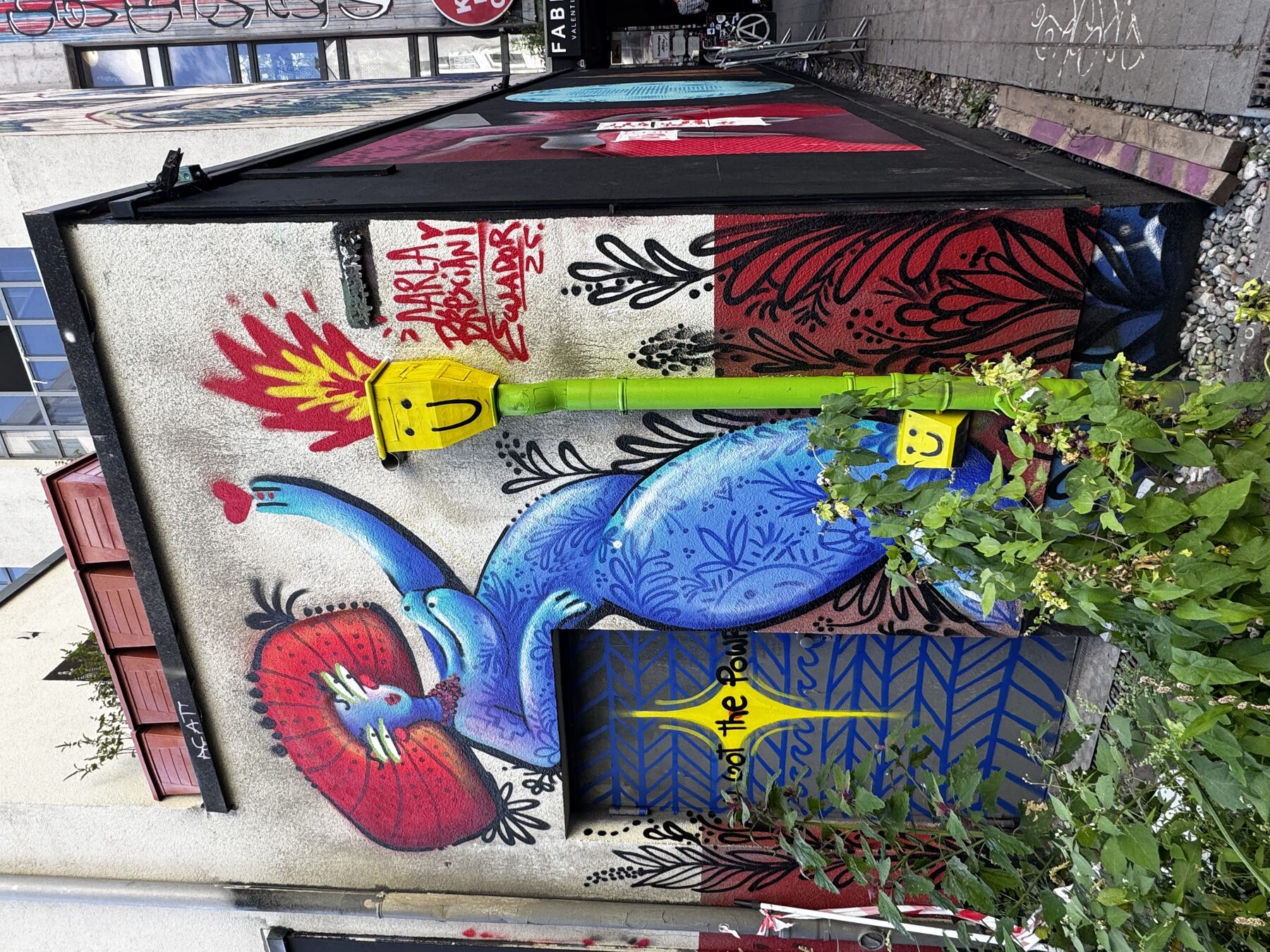
Apapacha tu Luz · Brujas, Bélgica, 2025
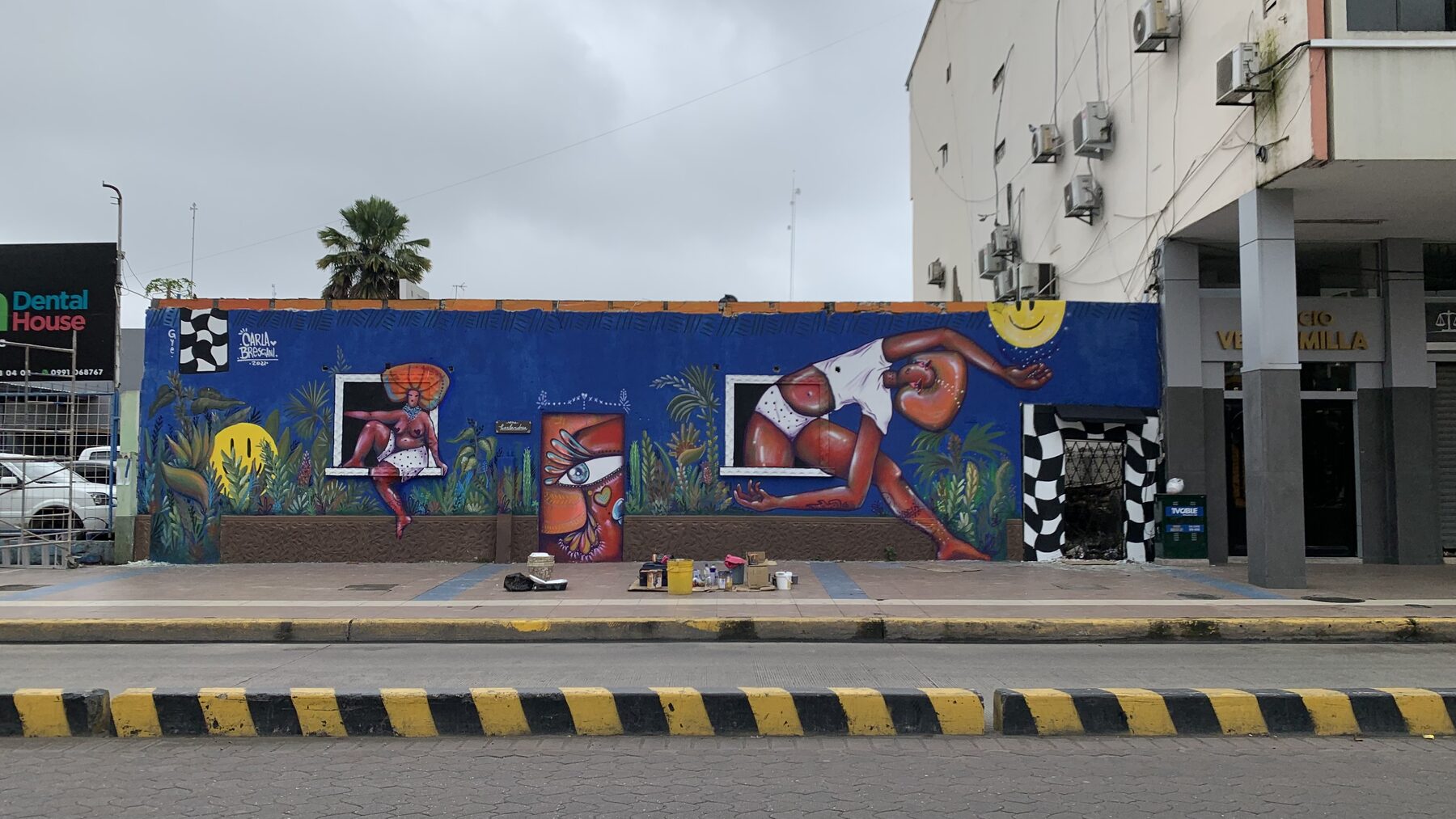
Bendita eres · Cuenca, Ecuador, 2024
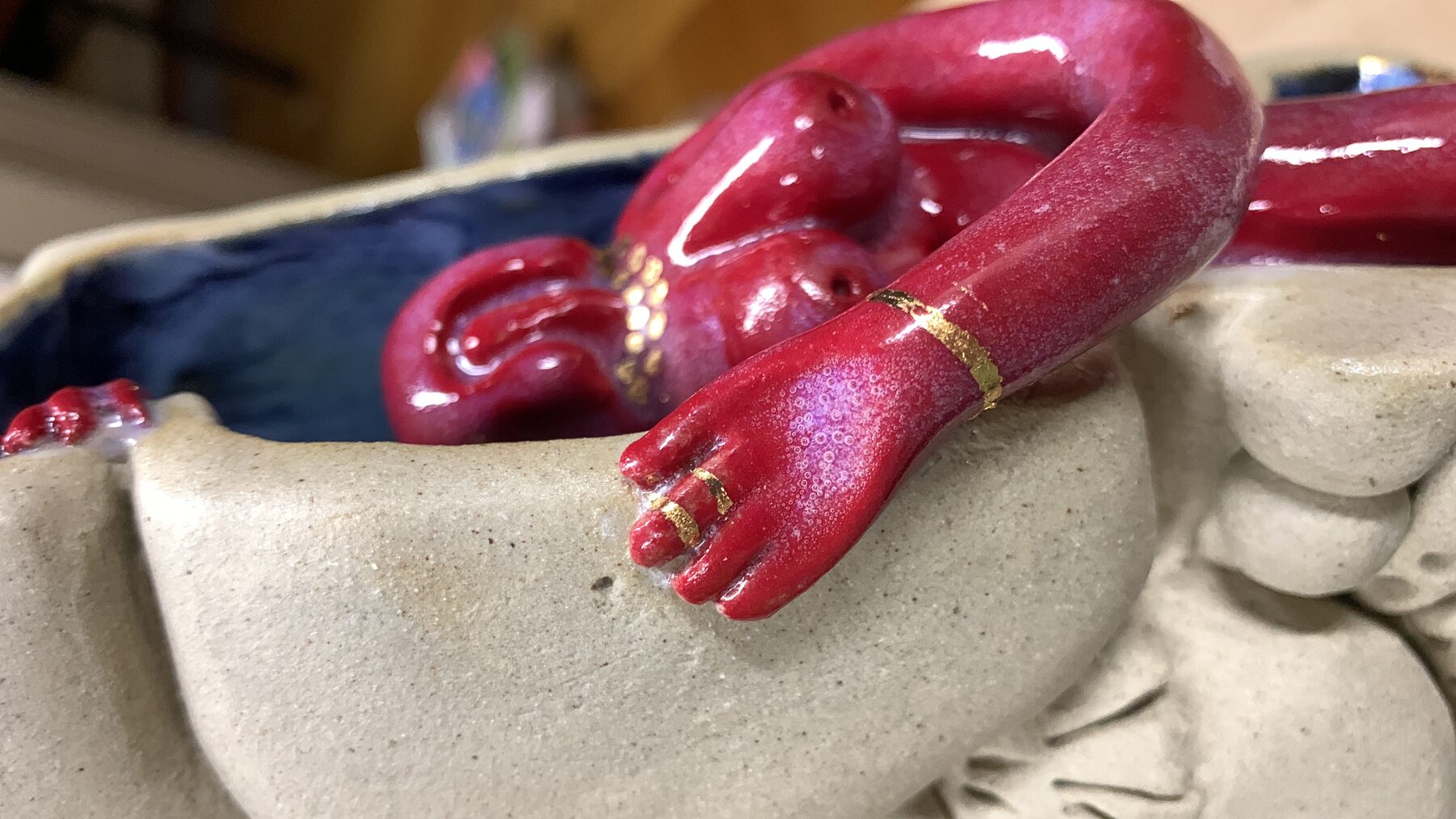
Escultura cerámica · Detalle de proceso
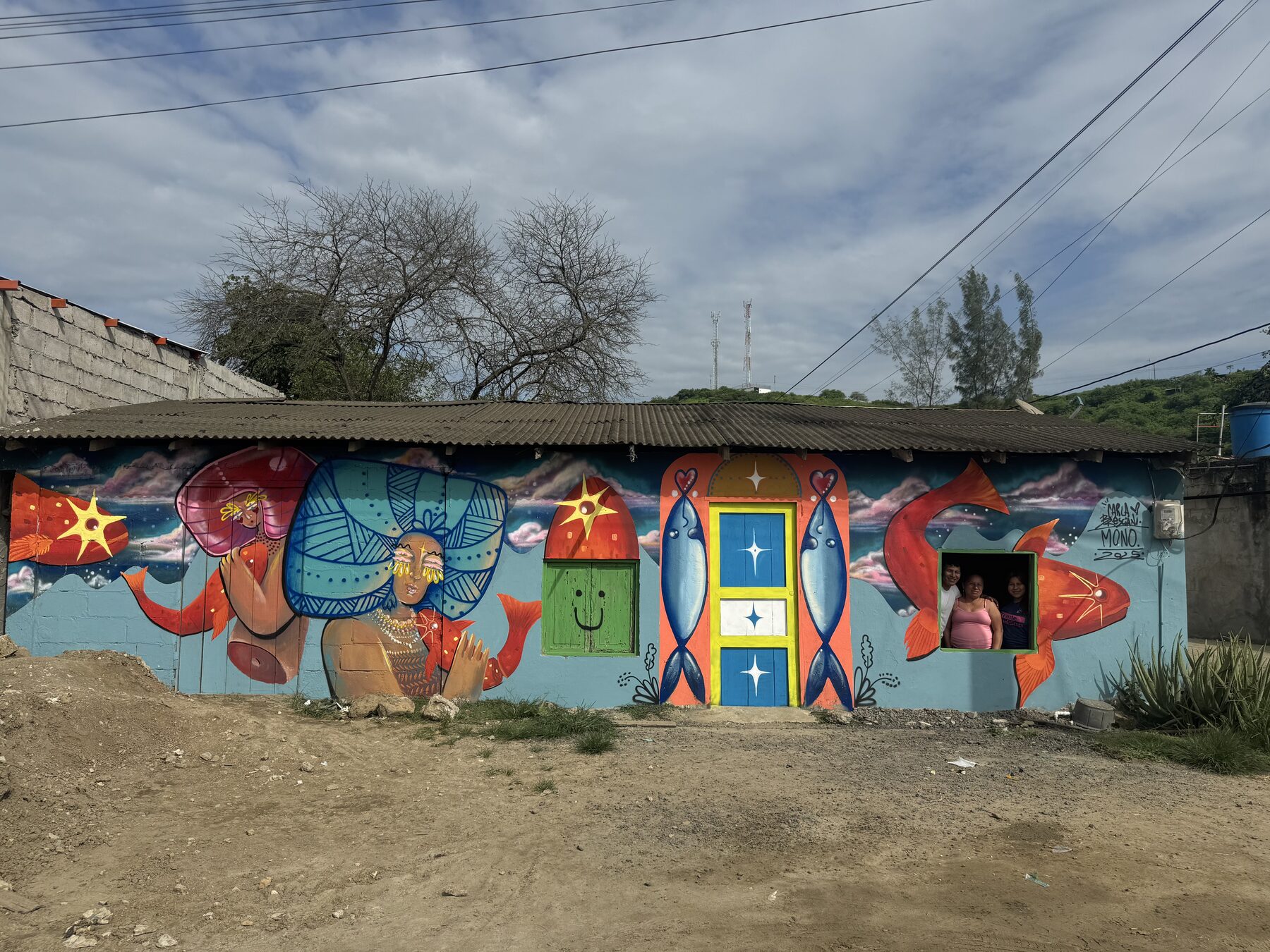
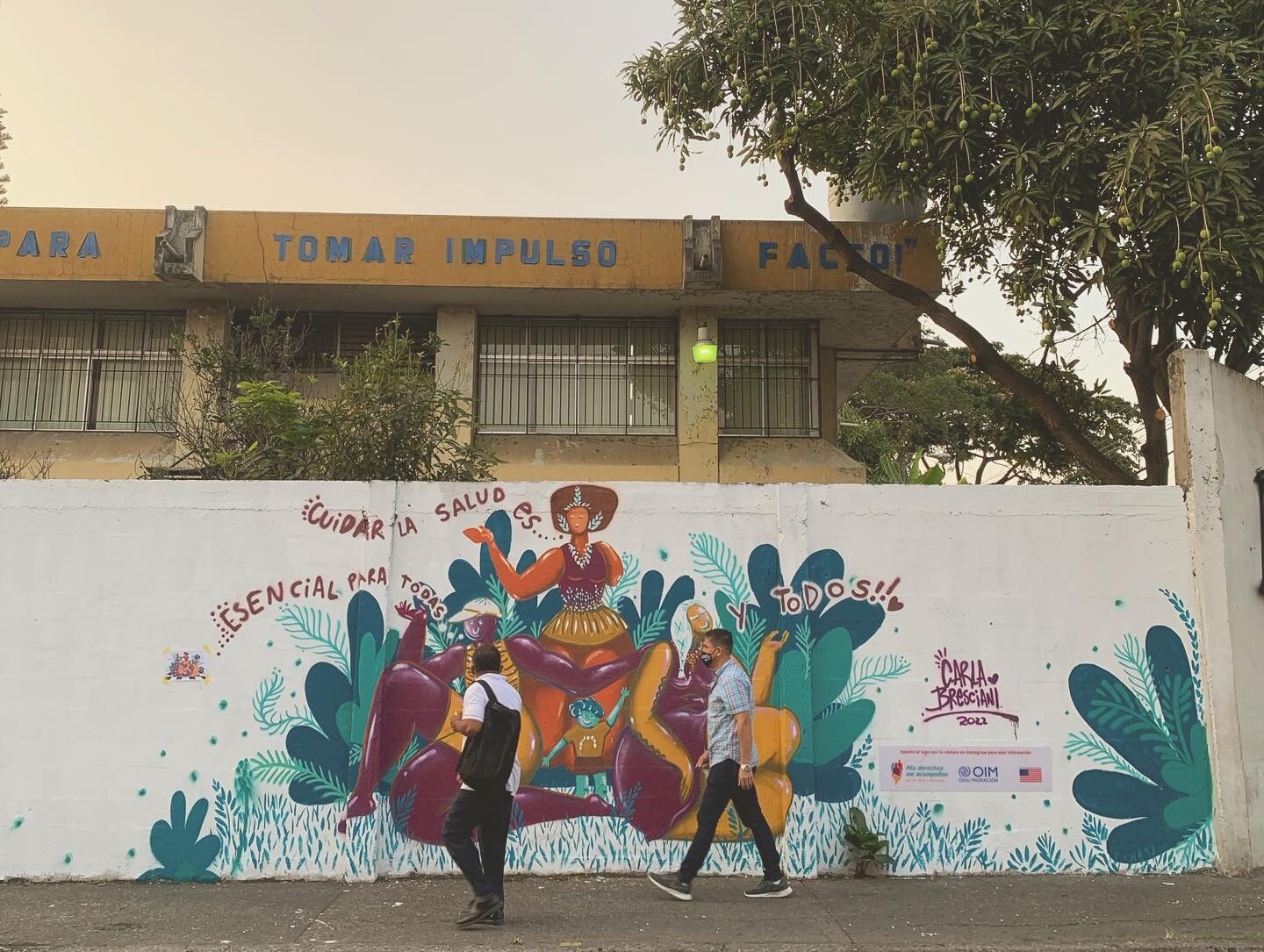
Mural comunitario · Comunidad Tsáchila
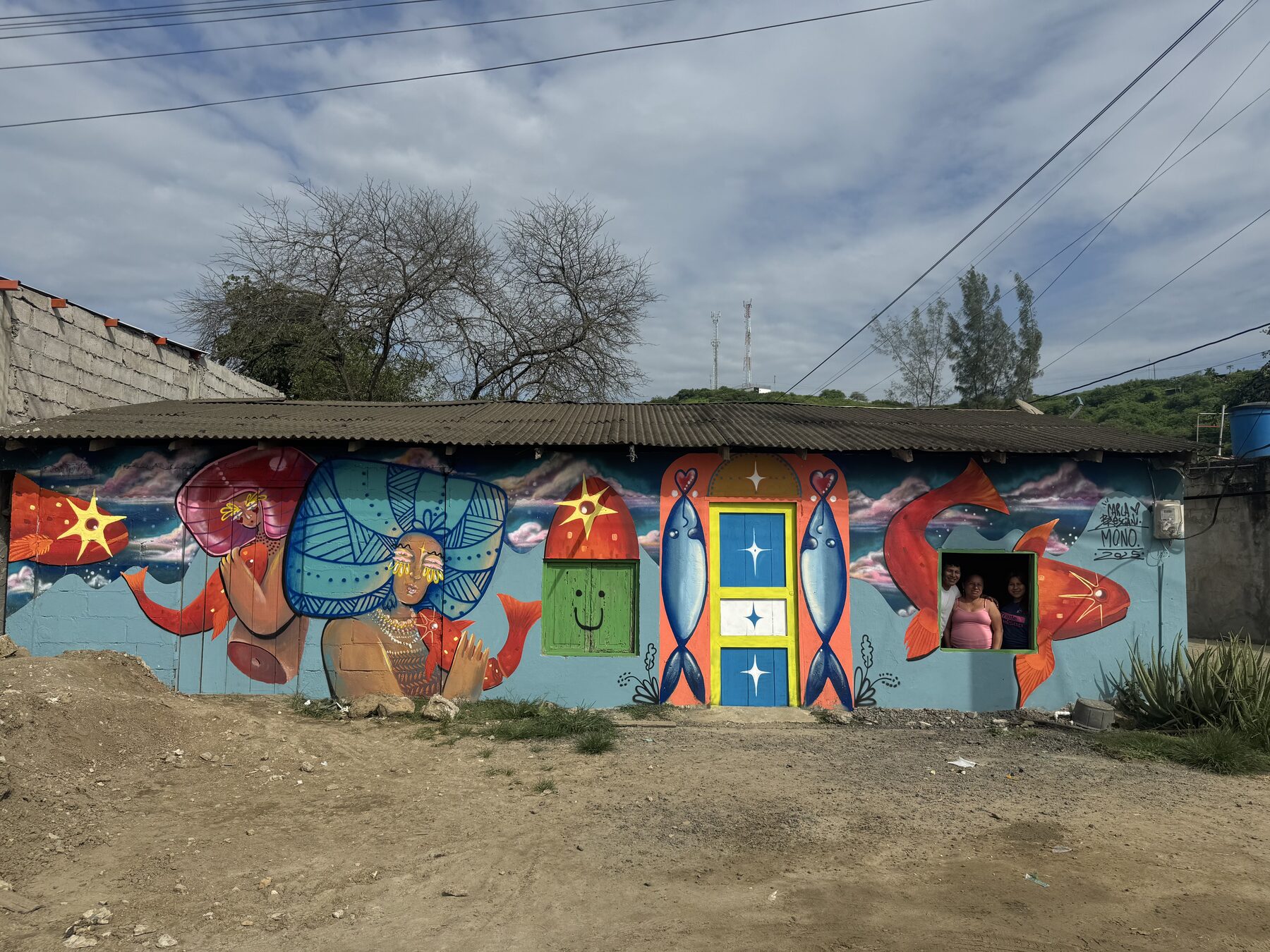
Anatomía de la Elección · Valdivia, 2025
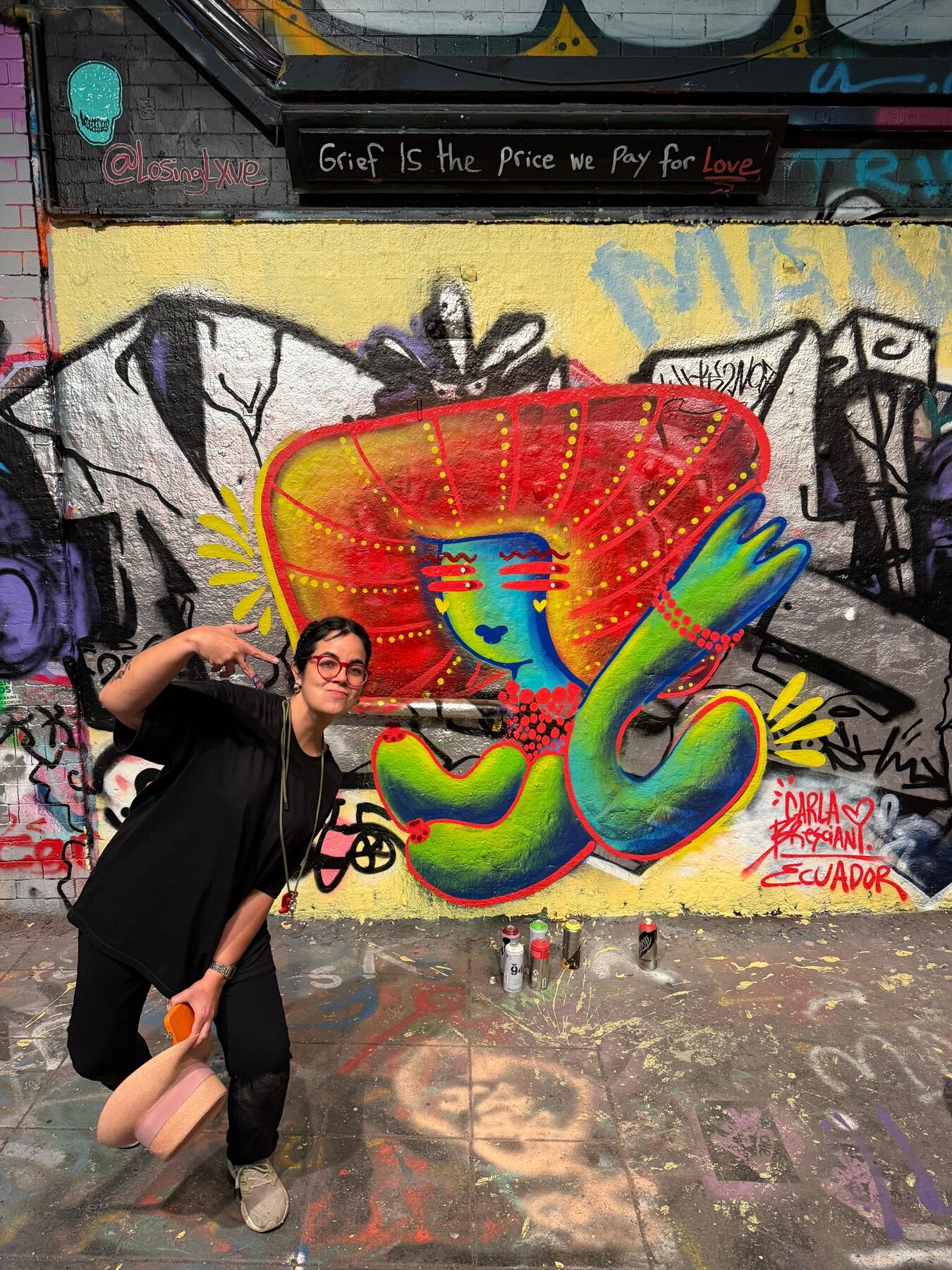
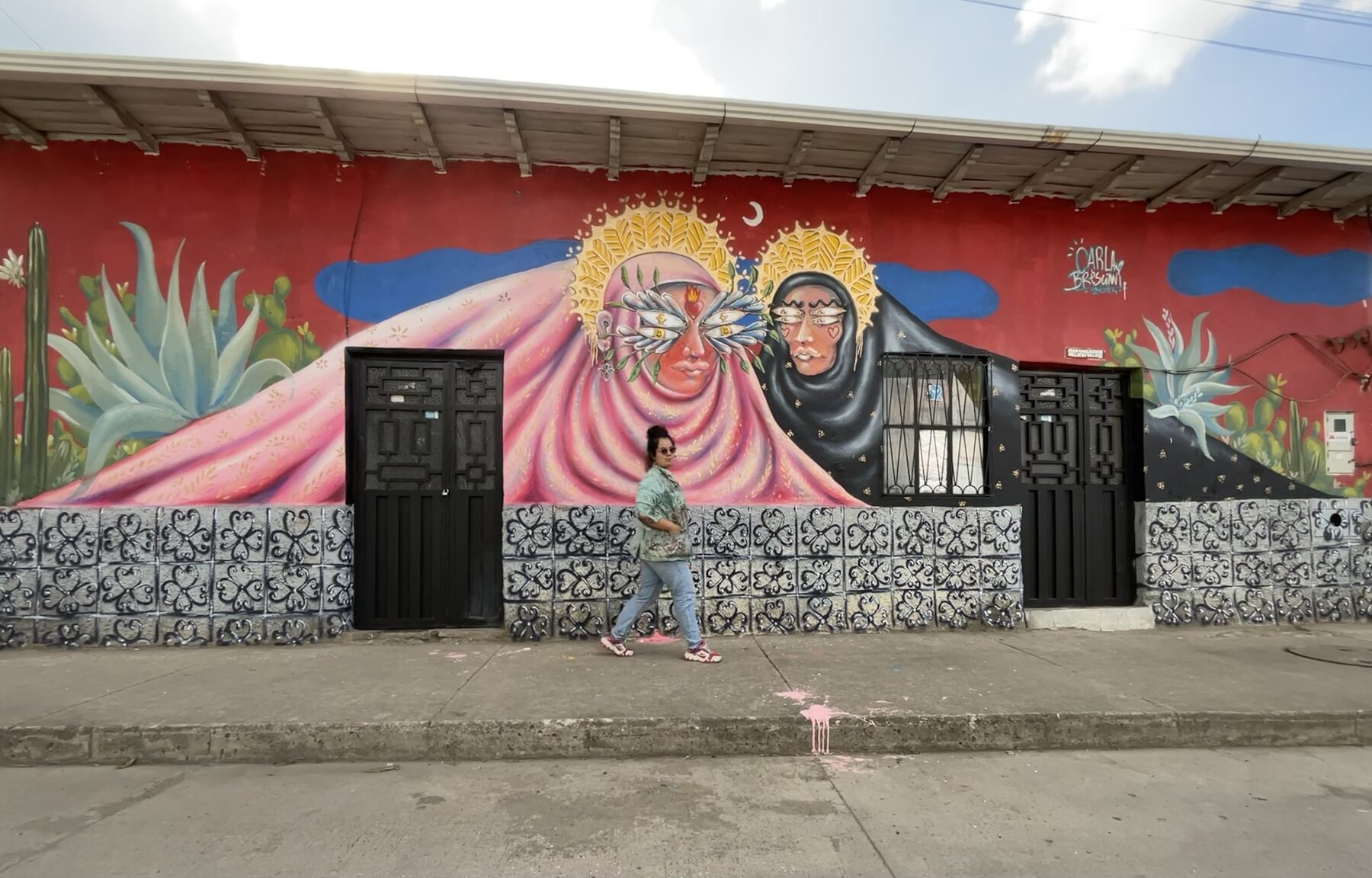
Presencia geográfica · Muralismo contemporáneo · Territorio Geographic Presence · Contemporary Muralism · Territory
Trayectoria expositiva Exhibition History
Currículo abreviado Abbreviated CV
Prensa y medios Press & Media
Investigación en curso Ongoing Research
Este proyecto en curso propone una investigación visual y simbólica sobre las representaciones de la divinidad femenina en distintas culturas y momentos de la historia.
A través de la pintura, la escultura y la experimentación digital, traza un mapa poético que conecta las deidades ancestrales del trópico ecuatoriano con figuras sagradas del imaginario europeo, observando sus transformaciones en el tiempo y sus vínculos con los cuerpos, los rituales y la vestimenta.
La obra busca generar una lectura crítica y sensible sobre el rol de lo femenino en la construcción espiritual de las sociedades. Este capítulo se encuentra en expansión, alimentado por viajes, archivos, textiles, arquitectura y símbolos que dialogan entre lo mágico, lo histórico y lo corporal.
This ongoing project proposes a visual and symbolic exploration of the representations of feminine divinity across different cultures and historical moments.
Through painting, sculpture, and digital experimentation, it traces a poetic map connecting ancestral deities from the Ecuadorian tropics with sacred figures from the European imagination, observing their transformations over time and their connections to bodies, rituals, and garments.
The work seeks to offer a critical and sensitive reading of the feminine role in the spiritual construction of societies. This chapter is in constant expansion, nourished by travel, archives, textiles, architecture, and symbols that speak across the magical, the historical, and the embodied.